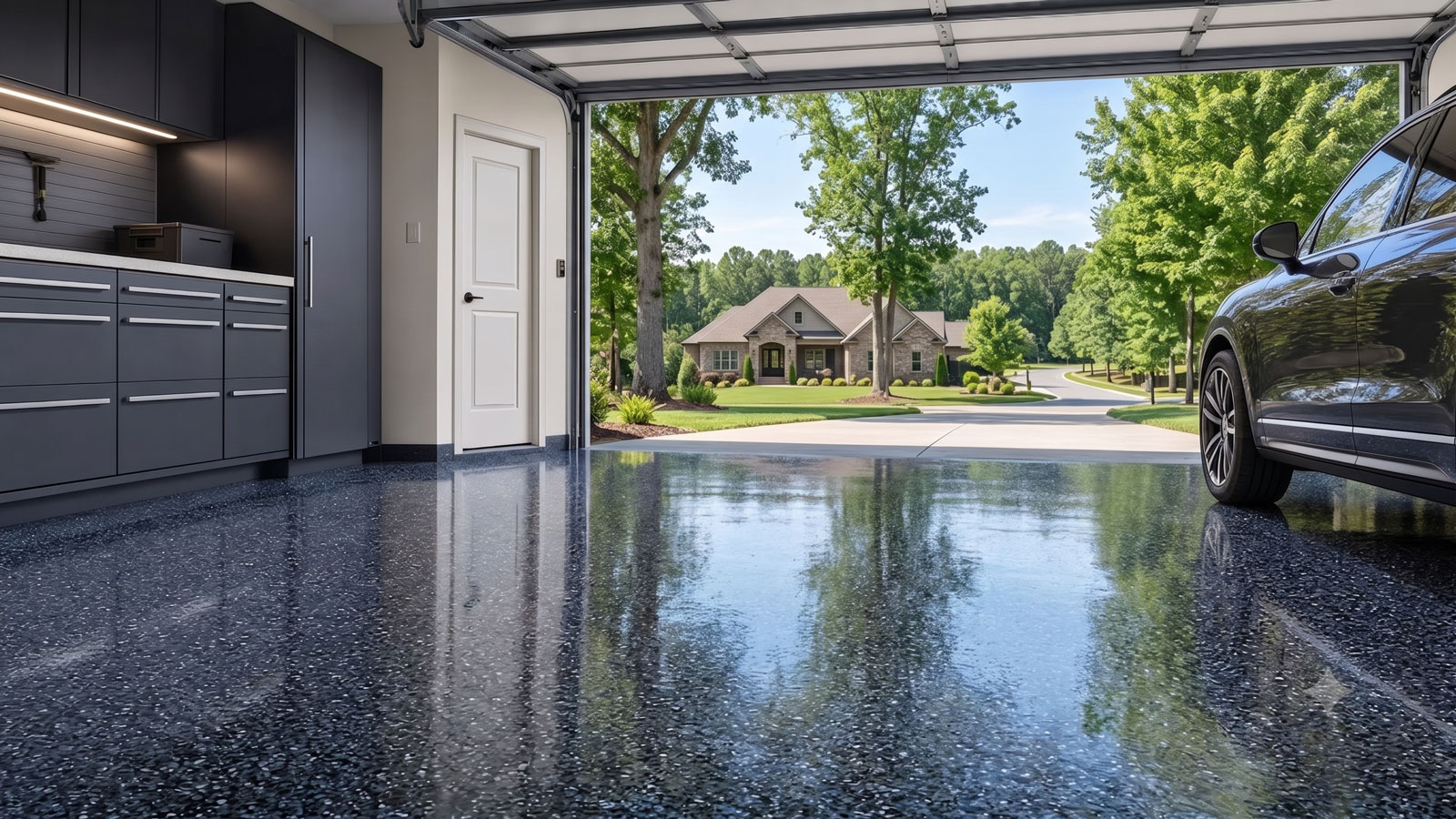
Garage Floor Coating in Grafton, MA
Floor Coating Services in Grafton, MA
Grafton added 1,920 housing units after 2000, and the median housing-unit construction year was 1978. Those townwide measures do not date a garage. A bay may be an addition, replacement, or repour; ask about the concrete’s own history before estimating preparation or repair. Growth spans different eras, so do not assume one slab condition.
Grafton’s 2020 housing-tenure mix was 75% owner-occupied and 25% renter-occupied. That mix does not tell whether a particular garage is private, shared, or separate from the residence. Confirm how the actual space is accessed, used, and cleared before comparing a coating scope or vehicle-staging plan. If space is shared or detached, clarify who controls entry and where vehicles can stay during cure.
North Grafton’s proposed transit-village redevelopment near commuter rail is future land-use context, not a count of completed homes, garages, or parking. For an existing property, measure the actual floor, record prior finishes and repairs, and plan around current access rather than a proposal. The proposal does not describe present parking at an existing home.
Local Market Insight
Grafton’s older homes coexist with substantial post-2000 growth, and North Grafton’s transit-village proposal is not completed housing. Verify the age and finish of the actual garage; for timing, check the current approach and material after winter road treatment or snowfall.
What Affects the Cost of Garage Floor Coating in Grafton?
Grafton added 1,920 housing units after 2000, while its median housing-unit construction year is 1978. Neither figure specifies a garage’s dimensions, slab date, or finish. Estimate from the measured bay, observed coatings and repairs, edges, joints, and access.
Grafton road treatment uses sodium chloride and avoids sand, while road widening after snowfall can return snow to some driveways. Neither determines what is at a particular address; confirm visible material, a clear approach, and the selected system’s cure window before scheduling.
- Post-2000 housing growth and garage history: Grafton added 1,920 units after 2000, but this does not date a particular bay. Check whether the garage was added, altered, repoured, or previously coated before estimating removal or repair.
- 1978 median year versus slab condition: The median housing-unit year is 1978, not a concrete specification. Compare the actual slab profile, prior finish, patches, joints, and deterioration rather than basing preparation on the house date.
- Private, shared, or separate vehicle space: Grafton’s owner/renter tenure mix was 75%/25% in 2020. That townwide split does not identify who controls a specific garage; clarify who can authorize access, clear stored items, and coordinate work.
- Observed winter material: Grafton road treatments use sodium chloride and avoid sand. That does not prove a private driveway received the same material; describe visible residue and scope cleaning from the actual floor.
- Driveway widening and snow return: Some driveways may receive returned snow when roads are widened after a storm. Check the specific Grafton entrance and staging space rather than assuming a clear path.
- Edges, joints, layout, and cure timing: Door thresholds, steps, drains, storage, and shared access add work beyond floor area. Ask the provider to separate repairs and preparation, then confirm vehicle return timing for the selected system.
Call for a clear, project-specific estimate — or request one online.
Grafton Housing Growth Does Not Date a Garage Slab
Grafton’s 1978 median housing-unit year and its 1,920-unit post-2000 increase leave a wide range of possible garage histories. Neither town figure identifies when a specific bay was built; ask whether it was part of the residence, added later, or repoured.
Grafton’s 2020 housing-tenure mix was 75% owner-occupied and 25% renter-occupied, but that does not inventory private or shared garages. Confirm who uses the space, whether stored items must be moved, and how the work area can be reached. Photograph prior coatings, patches, cracks, joints, and threshold details.
A proposal should connect the condition actually observed to the preparation it includes. Ask which existing material must be removed, how repairs and joints are handled, and whether edge work is priced separately. No townwide housing era prescribes the same grinding, repair, or coating system for every Grafton floor. For a shared property, confirm who can authorize work, which adjoining vehicles must be moved, and who may return belongings. The 2020 tenure mix cannot answer those address-specific questions. Name the access lane, cleared bays, and parking plan in the proposal so the crew can reach the actual floor.
Grafton Winter Treatment and Driveway Access
Grafton road treatment uses sodium chloride and avoids sand. That practice does not establish a private driveway’s exposure. Check material visible on vehicles and at the garage threshold before adding cleaning to the scope.
During road widening, snow can be pushed back toward some driveways, changing access after a storm. Check where snow has accumulated at the actual property and whether equipment can reach the garage; do not assume all Grafton homes are affected alike.
Before booking, confirm where vehicles can remain while the floor is prepared and cured. Compare proposals on surface profiling, removal of incompatible coatings, repairs, traction choices, and the stated return-to-use time. Those details connect Grafton’s real access conditions with the particular slab instead of relying on a townwide assumption.
Frequently Asked Questions
Does Grafton’s 1,920-unit post-2000 increase tell me my garage is newer?
No. Grafton’s post-2000 growth describes townwide housing additions, not a particular garage. A garage may be older, added later, or repoured; inspect its own finish, repairs, and joints.
How should I use Grafton’s 1978 median housing year?
As context only. It cannot date your concrete. Ask about the garage’s own construction or replacement history and have its profile, prior coatings, cracks, and edges reviewed before selecting a system.
Can Grafton driveway widening affect access after a storm?
After a storm, road widening may leave returned snow at some Grafton driveway edges. Check the entrance and vehicle staging space at the actual address; the effect is not the same for every household.
Does Grafton’s road-salt policy show what reached my garage?
No. Grafton uses sodium chloride and avoids sand on municipal roads, but that does not prove private-driveway exposure. Describe visible material and base any cleaning scope on the actual floor.
Does North Grafton’s proposed transit-village redevelopment describe my current garage?
No. The proposal concerns potential change near commuter rail, not an existing home’s garage, parking, or slab. Base a coating scope on the present space, its current use, and the concrete condition.
Grafton Neighborhoods & Local Context
Phone Quote Line
Speak with a floor coating specialist about your project and get a realistic estimate range.
(508) 691-7773Typical Project Cost
$3,000–$5,500
Typical planning range for a two-car garage. Final pricing depends on floor size, concrete condition, prep work, coating type, and finish options.
Helpful Guides
Other Service Areas