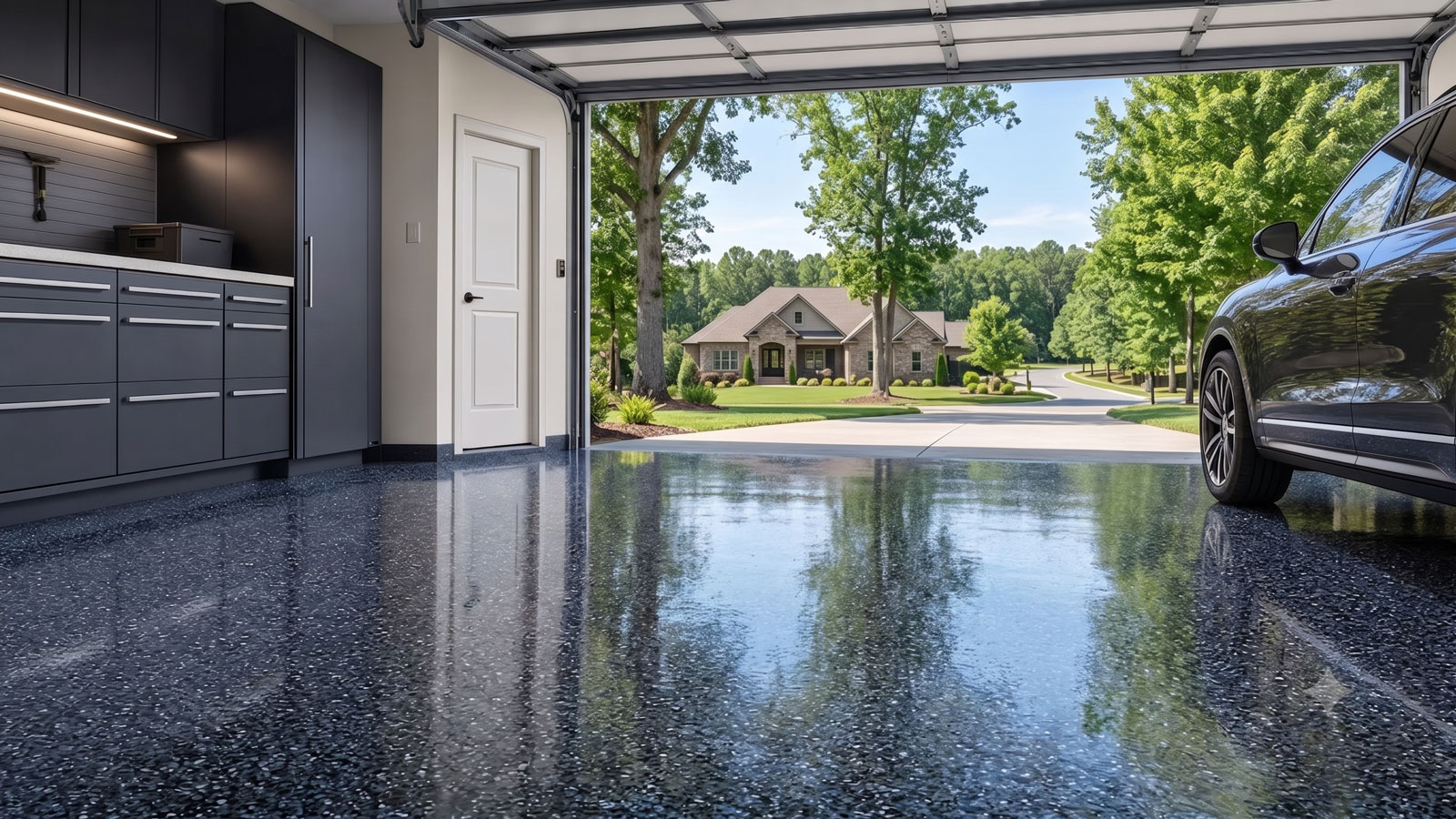
Garage Floor Coating in Holden, MA
Floor Coating Services in Holden, MA
Holden’s housing spans distinct building eras: local housing estimates place about 53% of units before 1970, roughly 30% from 1970 to 1990, and a smaller share after 2000. Those are housing-age patterns, not garage-slab dates. A garage may have been added, rebuilt, or repoured long after the house, so a coating decision should start with the actual concrete, its repair history, and its present surface.
That variety makes a slab-specific review more useful than choosing preparation from the home’s construction year. Ask what has happened at the garage floor: prior paint or coating, visible patching, joint movement, an added bay, a changed threshold, or a past repair. These details can affect preparation and scope, but they need inspection rather than assumptions based on Holden’s older and postwar housing mix.
Winter logistics are Holden’s other practical theme. The town’s snow-and-ice work and a year-round 1–6 a.m. on-street parking restriction make vehicle planning worth discussing before a garage is unavailable for preparation and cure. A municipal road program does not show what reached any one driveway or garage. Still, households that drive in winter can plan for cleaning, vehicle staging, and a clear return-to-use schedule.
Local Market Insight
Holden grant-funded winter projects were intended to enable pre-storm brine treatment and reduce salt use; they do not prove installation, current road use, or garage exposure. Inspect the slab and visible residue, then plan lawful off-street vehicle staging through cure because Holden’s 1–6 a.m. parking ban is year-round.
What Affects the Cost of Garage Floor Coating in Holden?
Holden’s housing eras make the house date a weak proxy for its garage: about 53% of housing is pre-1970, roughly 30% dates from 1970–90, and 17% from after 2000. Determine whether the slab is original, replaced, altered, or previously finished; a later buildout projection is not a garage inventory.
The town’s 122-mile public/private winter-road network, brine-system investment, and year-round 1–6 a.m. parking restriction create questions about observed residue and vehicle staging—not conclusions about an address. Compare cleaning, removal, access, and cure assumptions against the actual floor and the household’s overnight parking options.
- Holden’s distinct housing eras: About 53% of housing dates from before 1970, around 30% from 1970–90, and 17% from after 2000. Ask whether the garage is original, added later, or repoured; assess its actual floor.
- Town growth is not a floor measurement: Holden counted about 6,646 housing units in 2010; a later buildout figure was only a projection. Measure the specific garage and describe its layout rather than infer its area from town totals.
- Public/private road network and access: Town snow operations cover about 122 miles of public and private roads and 20 miles of sidewalk. The network does not prove driveway treatment; discuss only visible residue and the actual route to the work area.
- Year-round overnight parking restriction: On-street parking is prohibited from 1 to 6 a.m. throughout the year. If the garage is unavailable during preparation or cure, vehicle staging and return timing can affect project logistics.
- FY2023 brine-production/storage grant: A state grant was directed toward a Holden brine-production and storage project intended for pre-storm use. The award does not establish installation, current application, or home exposure; scope cleaning from visible residue.
- FY2021 flexible-blade grant: A state grant was directed toward flexible segmented plow blades intended to reduce Holden’s salt needs. The award does not establish installation or eliminate winter material; include visible grit and the chosen system’s care requirements in the scope.
Call for a clear, project-specific estimate — or request one online.
Holden’s Housing Eras Cannot Date the Garage Slab
Holden’s housing mix spans generations: about 53% of homes date from before 1970, around 30% from 1970–90, and roughly 17% from after 2000. These categories describe housing, not concrete. An older home may have a later garage, and a newer-looking space may contain a repaired or resurfaced slab.
Ask when the garage was added or changed. Photograph coatings, patches, cracks, joints, thresholds, and edges. Record which marks are active and what the household wants from the finish. Do not use Holden housing counts to estimate an individual bay’s size or condition.
A useful proposal relates Holden’s varied housing backdrop to the concrete actually inspected: identify the existing finish, define its removal, name repairs separately, and state the proposed surface preparation and cure schedule. Townwide age patterns explain why the history question matters; they do not prescribe grinding, repairs, or a particular coating system.
Holden’s Route 122A and town-center focus is local setting, not a garage specification. Measure floor area and access, then compare preparation and repair scope rather than assuming similar-era homes need identical work.
Holden Winter Logistics and the Return-to-Parking Decision
A FY2023 state grant targeted Holden brine production/storage for pre-storm use; a FY2021 grant targeted flexible segmented blades intended to reduce salt. Neither proves installation or current use. Assess the actual floor and visible residue for cleaning and preparation.
A FY2023 grant was directed toward municipal brine production/storage intended for pre-storm use, while a FY2021 grant was directed toward flexible segmented plow blades intended to reduce salt. Neither establishes installation, current street-by-street use, or material at a private driveway. Check the actual approach and floor, then set cleaning and vehicle-staging plans from observed conditions.
Before work, confirm where vehicles can stay during preparation and cure, including overnight. The year-round parking restriction may make an off-street option important; confirm the provider’s timing before choosing a start date.
After winter travel, remove visible slush and grit and follow the selected system’s care guidance. A finish does not erase Holden’s parking constraints or diagnose water entry. Include observed floor conditions, vehicle staging, and return-to-use timing in the written scope.
Frequently Asked Questions
Does Holden’s older housing mix mean my garage needs more coating preparation?
No. Town housing eras do not establish a garage’s age or condition. Holden homes span several periods, so identify whether this garage is original or later-added and inspect its finish, patches, cracks, and joints.
What does Holden’s 122-mile snow network mean for my driveway?
Holden’s snow network includes about 122 miles of public and private roads and 20 miles of sidewalk, but the total does not show what reached one address. Discuss only residue visible on the driveway, vehicles, or floor.
How does Holden’s overnight parking ban affect coating work?
Holden prohibits on-street parking from 1 to 6 a.m. year-round. If preparation or curing overlaps overnight, arrange lawful off-street vehicle storage and confirm the provider’s return-to-use time before the project begins.
Does Holden’s brine-production grant prove my garage has salt damage?
A FY2023 state grant was directed toward Holden brine production and storage intended for pre-storm application. The award does not establish current equipment operation, street-by-street use, or what reached a particular garage. Inspect visible residue and the actual concrete.
Do Holden’s plow-blade grants mean I can skip winter cleanup?
A FY2021 grant was directed toward flexible segmented plow blades intended to reduce salt needs. It does not establish installation or eliminate winter material; remove visible grit and slush and follow the selected system’s care instructions.
Holden Neighborhoods & Local Context
Phone Quote Line
Speak with a floor coating specialist about your project and get a realistic estimate range.
(508) 691-7773Typical Project Cost
$3,000–$5,500
Typical planning range for a two-car garage. Final pricing depends on floor size, concrete condition, prep work, coating type, and finish options.
Helpful Guides
Other Service Areas